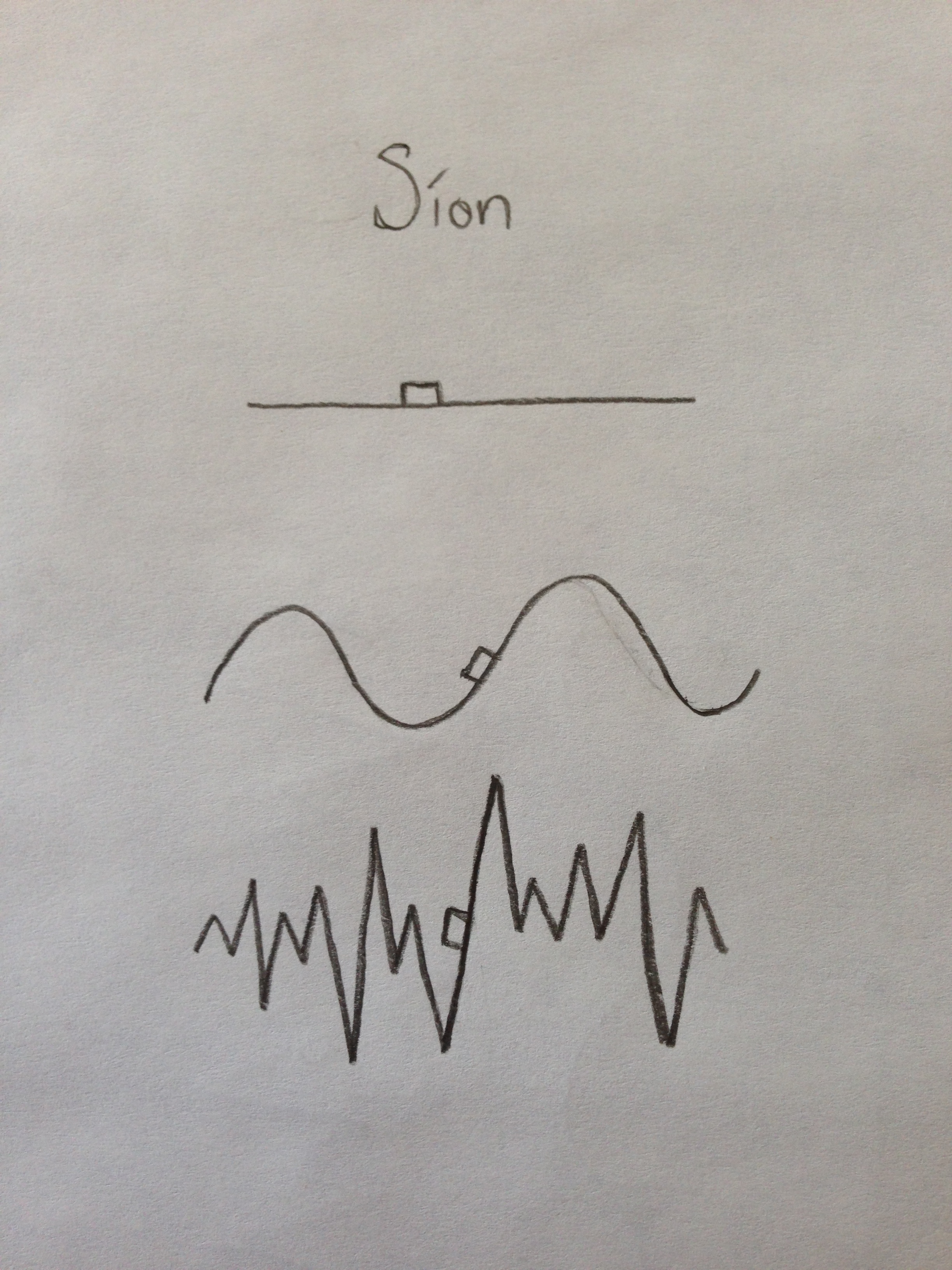
a Malvina Reynolds song
little boxes

a Malvina Reynolds song

Ah, geez. Well there are a million obituaries popping up all over the internet, and it would be a waste of time for me to throw my hat into that ring. So I’ll talk instead about the time Prince came to visit me in hell. Let’s back up for a minute and start this story at the beginning: with karaoke as an institution in Taiwan. It’s a big god damn deal. There are these massive skyscrapers that dominate the commercial districts of Taipei, each one basically a luxury hotel, all of them devoted exclusively to karaoke. It’s a really big god damn deal.
The American model of getting drunk and embarrassing yourself on stage in a public place, a model where you expect and basically invite ridicule, has no place here. This is much smaller, and much more serious. You rent these hotel-room-sized spaces, replete with couches and menus, then order up food and drink. It’s intimate, and straight-faced, and there’s no giggling at singers allowed. I had a friend who would sometimes rent a room and do karaoke by herself when she felt sad — that was actually the sanest thing about her (the final straw was her mailing, physically mailing, an envelope to my parents in the US with pictures and a note she had written pretending to be me… but, I digress).
So anyways, you’re in this room, and the music is terrible. I cannot stress this enough. Except for an exceedingly tiny, exceedingly awesome bohemian subculture, the sound-track to modern Taiwan is big-hair-blowing pop stars beating their chests and professing their homogeneously generic love/lost love. It’s just, gag. I know, commercial music is bad everywhere, and cultural relativity, etc… but I’m sorry, straw man who is judging my judging, you didn’t have to sit through it. I did. So I would sequester myself in the elbow of the L-shaped couches with a bucket of beer and a bottle of whiskey, and get absolutely smashed in an attempt to blunt the assault of super-serious banality, at which I wasn’t even allowed to poke fun. It was relentlessly awful.
But before all of that, before getting wasted and before the night devolved into whatever blurry mistake those sweaty rooms became for a blackout drunk, I made sure to grab the booklet and leaf through to the small section of English songs. Most of these, of course, were abysmal boy-band shit as well, but, without fail and for whatever reason, they always had Purple Rain. And so it went to the back of the queue, behind all the Chinese pop songs, sorted and forgotten.
At that point in my life, I was only going out to escape the hellscape inside my head. I was there because I couldn’t stand the destructive, spiraling, heartbroken darkness I was living in alone anymore, and so I sat, and tried not to visibly hate everything, and drank. Hours later, as the room was starting to dim and smear, the sound of that purple guitar rolled from the speakers like a revelation. Mid-conversation I lurched across the couch, over an irrelevant number of unfortunate people, and grabbed the microphone.
For a kid drowning in the quicksand of written-by-committee, soul-less, art-less, commercial garbage, drowning himself in darkness and demons and dead dreams, Prince appeared as a pair of purple wings. This raw virtuoso, who played every instrument, who sang with such an infectious passion you couldn’t help but feel, man, when that guitar came on… Well, like I said, I was very drunk — It got emotional. Whatever else happens, whatever you’ve had to endure, there are no truly terrible nights in which you’ve sung the entirety of Purple Rain. That’s just fact.
So rest easy, sweet The Artist Formerly Known As The Artist Formerly Known As Prince. Rest easy you gender-bending, multi-instrumental, sex-symbol, rock-god prodigy. I’ll always remember you as the sultry purple angel in my hell.
“I never meant to cause you any sorrow…”
[ed: they keep deleting the video — find it here if the embed is gone.]

a Benji Hughes joint
sketch by me

Question and Answer on the Mountain
You ask me why I stay on the green mountain;
My heart at leisure, I smile and make no reply.
As peach blossoms drift down into oblivion,
I have a world apart that is not among men.
-Li Bai (701-762, Tang Dynasty)
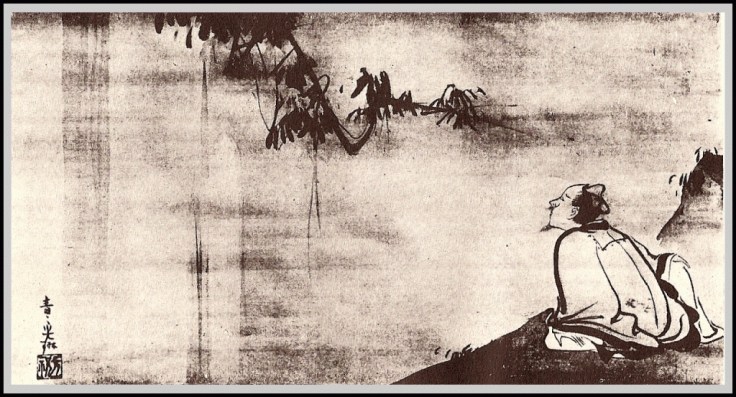
山中問答
問余何意棲碧山
笑而不答心自閒
桃花流水窅然去
別有天地非人間
李白
(it’s not that i don’t like
poetry, not really, it’s
just that i only like
a very few poets).

When you really get down to it, most musicians are lazy writers. Music can get by on the strength of a funky baseline, and falls prey very easily to the positive feedback sickness of “good enough.” That’s fine for a certain sub-set of listener (i.e. the top-40-consuming public) but I demand more, because I know if you push there is more. As someone who has spent a lot of time writing, most lyrics read to me like shitty first drafts. There’s potential in there, but if you were at a bar and someone wrote the words to any Red Hot Chili Peppers song on a napkin, handed it to you and said it was a poem they wrote, you would struggle not to laugh at them. It’s a bunch of stream of consciousness, “good enough,” first draft, you-figure-it-out garbage.
When you take a step back, this isn’t that surprising — writing and music are two separate mountains, each requiring a lifetime of struggle to climb. But the only songs for me are the ones that go beyond the good into great, and lyrics are always the final push that gets them there. Composing melodies and writing poetry are two very different, very difficult things; Isaac Brock puts the lie to the idea that you can’t do both. He’s a musician and a writer, and sings lead with a crazy lisp. He is awesome. Here’s a guy, I guarantee, who writes a second draft.
“Jaws clenched tight we talked all night oh but what the hell did we say?”
As I was filming this I remember thinking two things with absolute clarity: she would hate the way she looked here, and watching it would someday break my heart.
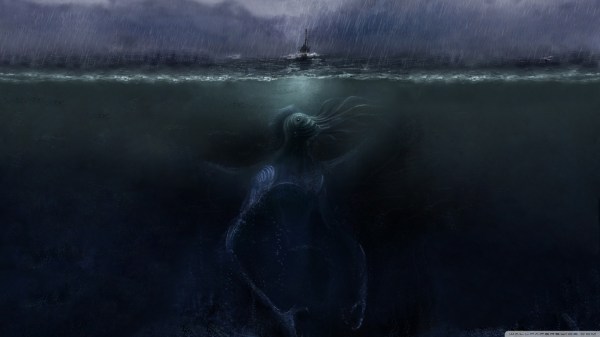
Ph’nglui mglw’nafh Cthulhu R’lyeh wgah’nagl fhtagn…
“In his house at R’lyeh, dead Cthulu lies dreaming…”
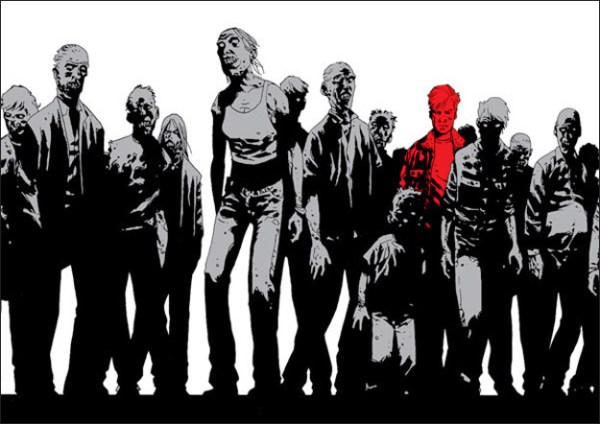
Speaking of Brian Wilson, the folks behind the television adaptation of The Walking Dead commissioned a cover of his song, “Love and Mercy,” specially for an episode of the show. This is the same brain-trust that opened recently on a tribute to David Lynch’s ear-in-the-grass scene from Blue Velvet, an homage so obvious it had me giggling incredulously in my seat. I began the series with Robert Kirkman’s jaw-dropping graphic novels, and they were so damn good (seriously, so damn good), that I didn’t really want to watch a television adaptation — I figured it would just be cheap/effective tension tricks and cliffhangers to sell advertising. It’s a rare thing, and don’t tell anyone I told you this, but every once in a while, I am in fact, wrong.
The acting, the writing, the loving but not slavish handling of the source material, all of it is top, top notch. More than anything, they understood the thesis of the series, which is the thesis of all zombie movies stretching back to George Romero’s Night of the Living Dead: nothing actually changes in the wake of a zombie apocalypse, it’s just that death has now been given form. For us pampered, bovine Americans, droning the days away in whatever combination of work and escapist fantasy we prefer, the specter of our own mortality is this impossible thing. We lock that awful knowledge in a room, refuse to acknowledge we’ve done so, then pretend it doesn’t exist. Is it any wonder then, that when it bursts out, as it must, we are woefully unprepared to face it?
Death in a zombie apocalypse is just another part of life, the same way it was for our ancestors, the same way it is for people in less developed parts of the world. It’s always there, and every day could be the day we slip and it snatches us down. Done correctly, zombies are nothing more than shambling, grotesque, excellently articulated metaphors. They’re the doom that stumbles along next to us, clutching vainly at our ankles; the clumsy, absurd half-wit, that despite all our best efforts, will someday eat us alive. It’s always there, always waiting, but better that it’s part of the scenery, moaning softly where we can see it, than forgotten in the closet, pawing at an unlocked door. Death comes for us all in the end, sure as shit, but it’s not necromancy and it’s not evil, it’s just a part of life — and life, my friend, is beautiful.
“So love and mercy to you and your friends tonight…”

For a brief moment, Brian Wilson and the Beach Boys were truly the American equivalent of the Beatles. Pet Sounds was an acknowledged influence on the famous Liverpudlians, and the sad pun of Surf’s Up, so darkly powerful in its simplicity, stands in stark contrast to the beautifully arranged, sun-soaked nothing on which they first ascended. “Surfin’ USA” was their “I Wanna Hold Your Hand,” and vapid commercial success became for them as well a spring-board to serious art.
When I say them, though, what I really mean is Brian Wilson. This is important, because that primary difference, the lack of diffusion in talent, became a problem when he gained a hundred pounds and fell apart inside himself. Imagine if the Beatles were really only John, and then John lost his mind; that’s what happened. Brian Wilson was perhaps the finest singer/song-writer of his generation, John and Paul included, but though he was a towering talent, and a beautiful artist, he was also very, very sad.
“Trees like me weren’t meant to live…”
Joshua Clark Orkin
it’s always there the signs were clear
there’s no lifeguard on duty here
my mother said you mustn’t fear
the ocean but respect it, dear
for if you swim you have to know
that some go down with the undertow
the fields are waiting gold and fair
they’d cradle my head and play with my hair
but i have got the longing stare
and what i seek is way out there
you’ll never reap if you don’t sow
though some go down with the undertow
i know it’s all some bright disease
the crazy lust for shining seas
i’ll miss your laughter in the trees
but i won’t miss begging from my knees
the skies will rend and a wind will blow
when i go down with the undertow
so if one day it comes for me
just let me go i’ll be fine you’ll see
the end at last will set me free
and peace compose me gracefully
the stars will shine and a wind will blow
when i go down with the undertow.

In this slow cover of an up-tempo ’80s song (a bit like “Mad World,” of Donnie Darko fame) Todd Terje takes over where Bryan Palmer thought he had finished. Covering an ’80s song with ’80s prom-music synths just tickles me all over, and digging Bryan Ferry up out of his ignominious retirement to sing it was a stroke of genius. The original’s lyrical excellence, the loss and regret in Ferry’s voice, the booming bass and retro synths — this song gets a lot of things exactly right. Your mileage may vary, but I find the whole thing strikes way too close to the heart. I find it really emotional.
“Johnny’s always running around
trying to find certainty
he needs all the world to confirm
that he ain’t lonely…
Mary counts the walls
knows he tires easily…”

Another old Concert à Emporter from the early days. Vincent Moon, my hero of musical film-paintings, is the fellow smoking and imploring him to sing. Kele, the man being implored, is both famously shy and gay. I like this a thousand times more than the polished studio version. A thousand thousand times more.
“Shh…“
an Asaf Avidan song
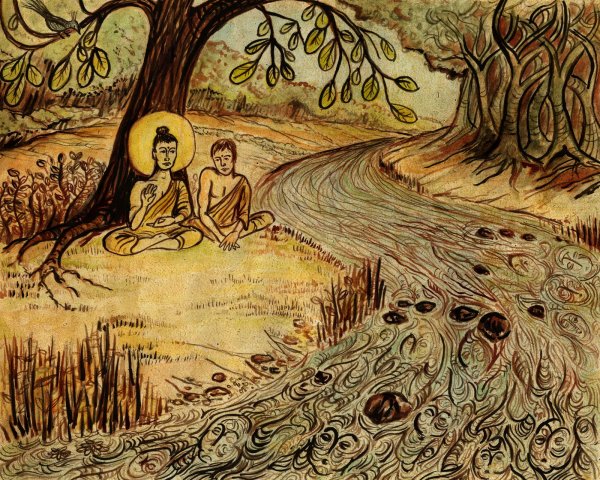
“Alright, I’ll tell you one. Just one, then you’ve gotta go to sleep. Your mom’s already going to kill me for letting you stay up this late. Deal?”
“Deal.”
“I’ll tell it to you as it was told to me, but forgive me if the details aren’t perfect, this old brain has seen better days. You remember Siddhartha? From last time?”
“Yeah, the prince who gave up all his money.”
“Yeah, that guy. Well, he had been on the road a long time now, and a group of people had taken to following him. Each morning at dawn these folks who had abandoned their lives gathered to hear Siddhartha talk. The talks weren’t religious, not in any organized sense, he was just thinking out loud, trying to figure out how to live. One of these followers was a young man named Kasyapa. He was new to all of this, Kasyapa. He struggled with the teachings, and the others made fun of him for his difficulties. But still each morning he came and sat before Siddhartha and tried to understand.
One morning the people gathered as usual, but instead of speaking, Siddhartha held up a white flower and sat looking at it. His students waited patiently for him to begin. Minutes passed. Then hours. “What is it?” Someone asked. “What’s the lesson?” said another. Soon it was noon, and still Siddhartha simply sat in silence with the flower. One by one the people, shaking their heads, some in confusion, some in disgust, rose and went about their daily chores. There was still much to be done in a camp in those days, even for poor wanderers. So they drifted away, until only Kasyapa was left, sitting alone before the portly sage.
He stared and he stared, this boy, with his brow scrunched and his tongue peeking from the corner of his mouth. He tried with all his power, straining until sweat beaded on his brow, but nothing changed, nothing became clear. “I’m sorry, master, I don’t know what you want me to say. I don’t understand.” Siddhartha just sat, unchanged, looking at the flower. Kasyapa let go a long breath, closed his eyes, and bowed his head. He had chores to do.
Before he got to his feet, however, he looked one last time at the flower. And this time, in a wordless stillness that stretched on forever, he looked and he saw. And he smiled. When he looked up, grinning, at Siddhartha, the Buddha was smiling back at him.”
“…”
“…I don’t get it.”
“Hush now, give it time.”
“But, why–”
“Shh, child. Stop talking.”
“But–”
“Stop talking and you’ll see.”
how would this world appear
if human sexuality were only
an annoying itch to scratch?
what would we aspire to?
what would our incentives be?
would we have ever built
the pyramids? notre dame?
rome? would we have had
an inquisition? a holocaust?
an apollo program? a mozart?
how are these things related
to sex? how is this shitty poem
related to sex? will you fuck me?
do you want me yet? wait don’t
pick him please i’ll do better
than this i promise here i will
distinguish myself here look!
fancy plumage! there! can i stop?
for fuck’s sake i never dreamed
of building pyramids anyways.
Sometimes people ask me what I’m doing, and I say listening to music. They say, right, sure, but what else are you doing? And I say well, nothing else. I’m just lying here, with my eyes closed, listening to music.
The man sat very still in the passenger seat, thinking on the sorry sequence of events that had led him here. As rain pattered against the roof of the car, he felt a sort of removal from the whole thing, like he was watching a tired re-run. Inside the Chili’s, the work party rolled on without them. The little blonde in the driver’s seat continued to sob, and the Brian Jonestown Massacre continued over her speakers:
“You should be picking me up…”
“Hey now,” he reached out a hesitant hand and placed it on her shoulder. “Come on now.” She undid her seat belt and laid her head in his lap.
“Instead you’re dragging me down…”
Hm, he thought. Not ideal. “Shouldn’t we go inside? The crying shuddered slowly to a stop. She sniffled, then said something muffled into his crotch. “What?” he asked.
“I don’t want to.”
“Then why did you come?”
There was a long silence down there, and some more sniffling and inaudible mumbling. That would be quite a thing to explain if anybody asked, that raccoon face of wet across his front. Finally it came, in a tiny mouse voice, just barely audible over the music, “I miss him.”
“Christ.” He sighed. “Fair enough.”
She sat up and smeared a hand across her face, wiping equal parts make-up and snot, before reaching again for the bottle. He’d already said his piece about the bottle, there was nothing more to add. She took a pull, used the back of her hand at the corner of each eye, then leaned against the window.
“Listen,” he said, “I get it, trust me, I really do. But this is terrible. You need to either let me drive you home, or go inside.” She rolled her eyes and groaned. “Look, if you go in there and get what you want, it’ll happen immediately. If you don’t, and you’re brave enough to see it, you’ll know that immediately as well.”
He reached across and pulled the handle of her car door. “Well?” he asked, as the door swung open. “Either I’m driving, or you’re going inside. Gotta get out, one way or the other.”
She looked her chin down into her chest, then tilted her face to the side, then slowly up to look at him. Her blue eyes, bleary with crying and drink, ringed with smeared mascara, half hidden behind the strands of blonde fringe, were surprisingly lucid. “Alright.” She screwed the lid on the bottle, tucked it under her seat, and dabbed at her makeup in the rear-view mirror. “Alright,” she said again. Then she took a deep breath.
He watched her walk across the parking lot, more poised on those black heels than he would have expected. She stopped before the door, tossed her hair over her shoulder, and looked back at the car. His heart hurt a little in his chest. Good luck, he mouthed, knowing she couldn’t see him. She went inside. He got into the driver’s seat and turned up the music:
“Now that you’re not around… Now that you’re not around… Glad that you’re not around…”
And there she was again. The door slammed shut behind her, and she went fishing under his seat for the bottle. “You were right,” she said, “I could tell.” She took a long, gulping drink. “Let’s go.“ He pulled out of the parking lot.
“Which way is home?” he asked. She pointed. After a while they left the street lights behind, and the country road began meandering through alternating vistas of darkened forest, then corn fields, then forest again. “There,” she said, as they entered another break in the trees. He pulled up in front of a little one-story house with an over-grown lawn and some rusted junk out back. The kind of house that looks like a trailer, but with a cement foundation. Lights were on inside.
“I’ll take your car back to mine and leave it there. You can get a ride in tomorrow?” She nodded. “You mind if I talk for a minute?” She shook her head.
“What you’re feeling? That sensation in your gut, like it’s about to split you open and spill out your intestines? I don’t know what it is, specifically, but it’s not love. Not anymore, not really. It’s rejection, and it’s fear, and it’s self-loathing, and it’s loneliness, and more than anything it’s the loss of a savior. But that pain isn’t love, and there are no saviors. You have to save yourself.”
She looked at him for a long moment, those blood-shot eyes — rimmed by mascara, half-hidden by the fringe — older than they seemed. “You’re wrong,” she said, “And what’s more, you’re kind of an asshole. But thanks, I guess, for trying.” She got out and let the door click shut behind her.
“I’ve got some pills, I’ve got a bottle of wine… and I’m feeling fine… I don’t miss you, no, I don’t miss you at all…”
He sat there parked by the road, listening, rubbing a hand over the stubble on his chin. Rain drummed softly against the roof, and in the distance lightning lit the sky. As he counted seconds and waited for the thunder, he suddenly felt very alone.

a Dr. Dog song
by Joshua Clark Orkin
when the aliens land at last
to ask humanity honestly why
we deserve to exist here why
we shouldn’t just be removed
from our verdant kingdom why
we wouldn’t be better served
with wine for we are so clearly
delicious done correctly why
we shouldn’t be kept in cages
too small for bodies from birth
in darkness shot with steroids
genetically altered for growth
until we’re pressed to the walls
of our cages and our legs break
beneath great bulbous bodies
and we collapse but can’t fall
so we scream please release us
and pray waiting for the light
at last blinding then followed
by the slaughter sweet escape
into freedom from a life grown
worse than death when the aliens
land at last to ask honestly why?
what have we added to existence?
in our panic we’ll say compassion
and they’ll cross their squid arms
and we’ll show them efficiency
and they’ll eye the strip mine
we made of earth unimpressed
so in desperation we’ll come
to what’s beautiful and lacking
the means to explain it we’ll turn
to our artists help them up
brush the mud from their eyes
and say sorry we’re so sorry
and ask politely to be saved.
an M. Ward joint
Joshua Clark Orkin
i remember my first question
at the eye doctor’s was,
“is there a chance
it could get better?”
and he looked at my mom
and they both looked at me
and then at 8 years old
they told me the truth.

…are you here with me?
i was on your side so why weren’t you
on mine? oh we’re adversaries? fine
art will stay zero sum if there’s only
enough space in our people’s collective
wallet and attention for one i pick me
oh don’t give me that look that thing
to review that work of not-yet-rejected
-a-thousand-times freshness that gasp
for praise when what you need is bitter
medicine to swallow for me it’s a lose
lose either way if it’s terrible i become
the bad guy if it’s good i’ll resent you
your effort and dedication your talent
is a detriment really resting laurels
so often catch us staring it’s the doing
the failing and the doing and the dying
to do it until it happens there are zero
child prodigy writers get wise i worry
that we like being artists affecting art
more than actually making it markets
set our values ranking pieces against
pieces turning artists into rivals for
what? fame? praise? the prize is to live
this life like a dream like a fairy-tale
creature who’s not forced to concede
the summation of a life in market value
my value makes me eye all you assholes
with dreams with suspicion why is this
so complicated? why isn’t there space
in our people’s collective why don’t you
make your thing and i’ll make my thing
and then we’ll have two pretty things.

did i take your number?
…did i call?
did we spend our lives together?
…i can’t recall
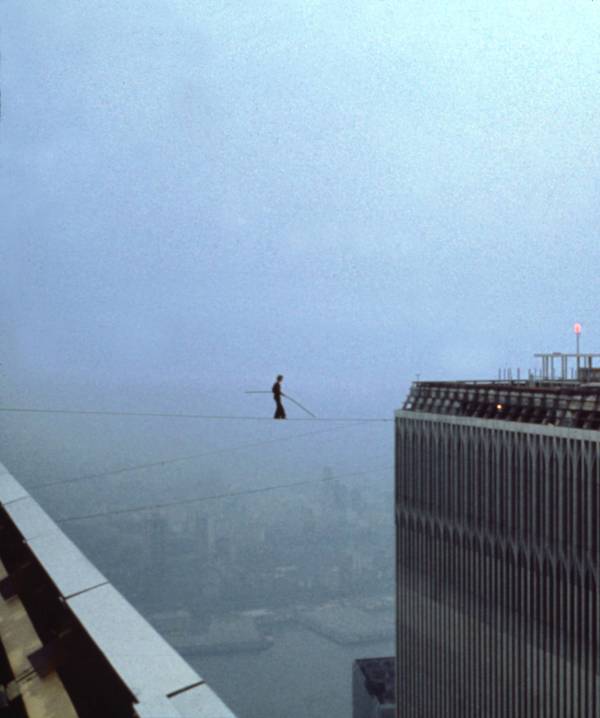
What we think of as normal in this era of regimented specialization is the one-in-a-dozen take, where everything goes just right. We so rarely see the real people behind the perfect curtain, being flawed and fucking up. But because of the holy shit moment at the end, getting the music just right suddenly became secondary. They had no choice — this was the take. The whole thing is a mess: the guitarist and saxophonist both miss notes, the drums are regularly off-beat, and to top it off, the players privately hate each other. Shortly afterwards, the lead singer would quit the band.
This is life.
Isn’t it beautiful?
a Yeasayer song
one last thought when left alone
still circles broken seeking home
that burned to ash some time ago
they say reflex is last you know.
to be honest i’m terrified of life
slipping away while i’m hiding
from people the eyes the fear
the manic conversation my voice
saying love me! the same way
to new people love me!
projecting insecurity praying
that a life out here dying
on the front lines of refusal
to compromise with anxiety
is somehow worth it to try
to be great enough to make it
something more than a cycle
of base desires and fulfillments
to be more than a slave to a life
of least resistance frustration
becomes doubt becomes failure
to try–to be honest–i’m terrified.
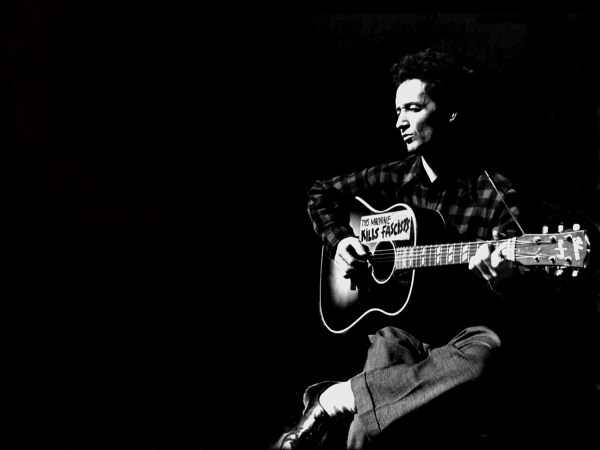
Woody Guthrie, on his deathbed, continued writing song lyrics. Too sick to perform them, or even set them to music, they all ended up in the care of his wife after his death. Years later, she contacted Billy Bragg and Wilco and tasked them with making his words into songs. Mermaid Avenue is the result of that tripartite collaboration. This song in particular always spoke to me.
“There ain’t nobody that can sing like me…”
I really believe that.
 handkerchief tied to stick