a Townes Van Zandt song

a Townes Van Zandt song

“Upward, but not
northward.”
-Edwin Abbot, Flatland
something’s not right
princess and the pea
it keeps me up nights
something’s bothering me
please turn off the lights
please close your eyes
find me with your hands
we’ll climb the night sky
i don’t care if it’s real
’cause i got to love you
but sometimes it feels
nothing human is true
something’s not right
it’s not what it seems
this life in the light
is too pretty to be
the weight of each day
waking up to the dread
all my awful mistakes
i’m alone in my head
in this beautiful world
i only want to be kind
you can lean on me girl
i’m not losing my mind
but something’s not right
princess and the pea
it keeps me up nights
something’s staring at me
please turn off the lights
please close your eyes
find me with your hands
we’ll climb the night sky.

“Oh, bliss, bliss and heaven. I lay all nagoy to the ceiling, my gulliver on my rookers on the pillow, glazzies closed, rot open in bliss, slooshying the sluice of lovely sounds. Oh, it was gorgeousness and gorgeosity made flesh…”
“…The Durango ’95 purred away a real horrowshow – a nice, warm vibraty feeling all through your guttiwuts. And soon it was trees and dark, my brothers, with real country dark.”
-Anthony Burgess, A Clockwork Orange
“C’est l’histoire d’un homme qui tombe d’un immeuble de cinquante étages. Le mec, au fur et à mesure de sa chute se répète sans cesse pour se rassurer:
‘Jusqu’ici tout va bien, jusqu’ici tout va bien, jusqu’ici tout va bien.'”
“Hear the one about the guy who fell off a five-story building? On his way down, he kept repeating to reassure himself:
‘So far so good, so far so good, so far so good.'”
-Mathieu Kassovitz, La Haine

Comme si cette grande colère m’avait purgé du mal, vidé d’espoir, devant cette nuit chargée de signes et d’étoiles, je m’ouvrais pour la première fois à la tendre indifférence du monde. De l’éprouver si pareil à moi, si fraternel enfin, j’ai senti que j’avais été heureux, et que je l’étais encore. Pour que tout soit consommé, pour que je me sente moins seul, il me restait à souhaiter qu’il y ait beaucoup de spectateurs le jour de mon exécution et qu’ils m’accueillent avec des cris de haine.
“As if this great anger had washed me clean, emptied me of hope, before that night sky full of signs and stars, I opened myself for the first time to the tender indifference of the world. To feel it so like myself, finally, so brotherly, I felt that I had been happy, and that I was happy still. For everything to be consumed, for me to feel less alone, all that remained to wish was that there would be many spectators on the day of my execution and that they would greet me with cries of hatred.”
-Albert Camus, L’Étranger
a Dave Van Ronk song

“She’s in your every dream…”

“In the pines, in the pines…”

“ne m’abandonne pas
mon amour
ma cherie…”
“You’re 5’5”, not a hundred pounds;
I’m scared to death
of every single ounce–
And worst of all is when it’s calm,
‘cuz I know the sea
won’t be calm for long”
“I made myself a sitting duck…”

a Folk song
arranged by Dave Van Ronk

a Jimmie Hodges joint
arranged by The Mills Brothers

Now, in a neatly eclectic musical pirouette, we spin from finger-pickin’ blues gospel into the electronic rhythms and screaming harmonics of Animal Collective. Long a fringe act with an alienating-at-first edge to their excellence, it was right around here that Animal Collective hit on the balanced formula that led to mass appeal and mega-success.
Though global notoriety wouldn’t come until the next album, you can already hear the maturation of their sound in Feels and Strawberry Jam. Both albums are excellent and important, I really can’t recommend then enough, and this song in particular always felt to me like the polished culmination of something they’d been building towards for a long time.
As much as I love them though, I can’t help but add that Fireworks is a great example of how first-draft writing won’t kill a song — far from it — and what an unfortunate disincentive that can be. While there are a lot of good lines, really, a lot, there are at least an equal amount that are just… bad. Bad like bad poetry bad. Honestly, they could’ve titled the song pretty much anything and it would’ve remained fundamentally unchanged.
And really, that’s not the end of the world. I still love the work, I chose it for the bindle, and I’m sitting here listening and enjoying it all over again as I write about it. But it is wasted opportunity, and it’s not an isolated incident — if anything, it’s the rule. For so many songs, after the last note fades, the lingering, frustrating question remains: if it’s already this good…
What could it have been?
“I can’t lift you up, my mind is tired…”
“I eventually came to the conclusion you should never say anything in poetry that you would not say in prose. Poetry has the same obligation to make sense as any other statement made by the human mouth. […] As for songwriting, if something has a pretty enough melody or a strong enough sense of arrangement, people will listen to it even if the lyrics make no sense — but that does not make it a well-written song. […] When songs get pretentious, overflowery and obscure, that person is proclaiming he or she is an artist. […] I think it was a good thing that, back in the Renaissance, people like Michelangelo were treated like interior decorators. A well-written song is a craft item. Take care of the craft and the art will take care of itself.”
-Dave Van Ronk, The Mayor of Macdougal Street
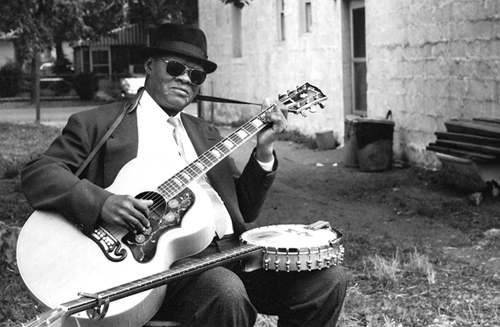
The Reverend Gary Davis was one hell of an interior decorator.
Almost a year ago today, by some yoga-teacher-training miracle, I gave up nicotine. Since then I’d bummed a smoke now and again when out and about, but my brain had firmly reversed course, closing down the synapses that had fired relentlessly for “pack-a-day-smoker” these past 8 years, and re-opening the cracked and broken avenues of childhood, the decrepit synaptic pathways of “non-smoker.”
It all began with a girl, of course, and a desire to share something with her. In time the girl faded, but cigarettes? Yeah, me and my monkey, we got along famously — if it were just a dirty habit we’d still be together. Make no mistake, I won’t lie to you: I loved smoking.
I had no tattoos and no piercings; as Tom Waits once said, cigarettes were my “artist’s jewelry,” part of my identity, the self-destructive mask of how I saw myself as a poet. More than that though, way, way beyond aesthetics or emulating old heroes, cigarettes became my teddy bear, an escape from crowded rooms, an ever-reliable steam-release valve for any and all anxiety. Finding a quiet place to sit and smoke was my faithful friend through all the times that I was lonely.
And then I was home alone in my rooftop shack in Taipei, having trouble breathing, probably from smoking my way through another chest cold. In time that fear grew into a blossoming panic attack about emphysema and lung cancer and dying in a hospital bed with only my own idiot choices to blame. I don’t know how to describe this kind of anxiety, except that it’s physical, and unbearable, and it demands more than anything an outlet. The way I dealt with that unbearable anxiety, of course, was to go outside and smoke a cigarette. I knew as I was doing it: this was fucked. I was fucked.
So some 3 years later — it took 3 more years — the stars aligned and I found myself truly ready. I moved into vaporizing, wrapping my own coils, twisting my own wicks, then another year tapering the nicotine down, then finally, on the first day of yoga school, I quit the beast altogether. The last exhale was, for this humble addict, something of a miracle.
For the next year I was free. It was cool, I could bum one now and again when I was out, no big deal, no tailspin, nothing. My machinery was re-wired, I went running, sat through the credits of movies, regained my sense of smell, it was good. Then last month, cold turkey off meds and returning to the world, I had a suddenly powerful urge to smoke a cigarette.
With no-one around to bum from, I drove to the store and bought a pack and smoked one. I’d been on a successful kick of don’t make a thing of the occasional square, and it won’t become a thing. But something felt immediately different this time, maybe it was having 19 more of them there in that familiar little box, maybe my stars had fallen out of alignment, I don’t know. Wrestling with myself the whole way home, I eventually threw it out the window as I passed a bar.
The next day, as I was moving into my new place, I bought another pack. It just happened. With a pack in the pocket it was like the last year had never existed, my brain tore the police tape right off the “smoker,” synapses and lo, they had been impeccably maintained: first thing in the morning, again with coffee, after every meal, last thing before bed, every hour on the hour and not even physically addicted yet.
There was more to this than just a re-lapse, (smoking starts as symptom, not cause) but I told myself I would finish this pack and that would be that. The sooner I went back to the mental state of “non-smoker” the easier it would be to believe. The new housemates had no idea that me sitting outside in the morning, shirtless, smoking cigarettes, was me in crisis. They thought that was just me. And I suppose, to some extent, it was. I smoked that pack down in two days flat and that was that.
There is an intersection on the way to my apartment, where you turn right to go home, but if you go straight you’ll come to a 24-hour gas station. The next evening I found myself sitting in the car at this empty country intersection, engine idle, light green, listening very carefully to the sound of the turn signal:
Tik-tik, damnation said.
Tik-tik, I said to damnation.
Tik-tik. Tik-tik. Tik-tik.
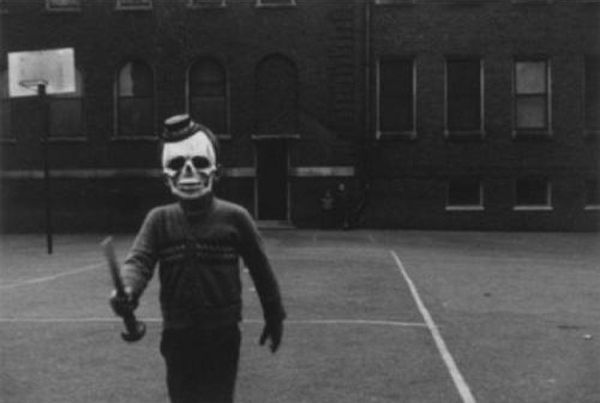
a Dr. Dog song

Famous primarily for Yoshimi Battles The Pink Robots (an admittedly awesome studio offering), The Flaming Lips are really revered in smaller, music-geek circles for what they do live.
The closest thing I’ve heard it compared to is the visual performance art of David Byrne and The Talking Heads, particularly in Jonathan Demme’s concert-movie Stop Making Sense (in which Byrne dons the fat suit). The Talking Heads, though, maintained a comparative distance from their audience — their art was a presentation. With The Flaming Lips it’s inclusive, the show is their gift to the audience, like they’re trying to give everyone a brilliant, exploding, colorful hug.
Here’s an offering off my favorite of their records, a loose (very loose) concept album called The Soft Bulletin. I’ve encountered a number of people lately who don’t know this band. That’s unacceptable. Know this band.
“…They’re just humans
with wives and children…”
Studio:
Shaky, low-quality, in-the-audience Live:
[ed: My housemate, a fan, saw them live and was disappointed. Then again, Benji Hughes Went With Some Friends to See The Flaming Lips. Anyways, YMMV.]

“…but I’m not just being blue,
‘cuz I have form and shape and color too,
and I miss you”

The human brain takes in everything. Everything. If you spin around in a circle just looking and listening, your brain logs every bit of sight and sound; every single detail your eyes glaze over is absorbed with a computer’s meticulous accuracy. We’re super good at processing this information, these sights and scents and sounds and sensations, and deciding on the 1% that is pertinent while pushing all the rest to the back of our brains. It’s what allows us to function. Our brains are cream-of-the-evolutionary-crop super-processors.
We don’t know much about sleep, except that without it we go — literally — insane. The theory I’ve heard that makes the most intuitive sense is that when we dream, the unconscious brain processes all that raw information, the ceaseless, endless litany of sensory stimulation we spend our waking hours accumulating, then like a secretary in an office, it separates and categorizes all that input, filing what it needs in long term memory, clearing the cache of short term, and junking the rest.
We’re the evolutionary products of people who managed to trick themselves into believing this world fits into understandable categories; the children of the ones who got good at parsing this chaos into manageable chunks, pretending there was order and sanity and logic to any of it. Pretending that the reality of our existence is somehow a comprehensible thing. It isn’t.
We’re a pack of talking monkeys who leap-frogged our evolutionary capacity via language and technology to a point where we’re now sitting at our control panels pushing buttons, twisting knobs, pulling levers on things we only half understand. Evolution will catch up, eventually, but right now? If we were shown the hyper-dimensional reality of the universe, merely the actual parameters of the physical space we occupy, our silly heads would pop. There are some things (cough, infinity) that we simply don’t have the capacity to understand.
If some god-creature came down to Earth and said, “Hey monkey, wanna know what’s really going on? What all this really is?”
We would say, “Yeah, of course!” Then just before the fatal hemorrhaging began and we dropped like a wet sponge, our last few sentences would go something like,
“Time isn’t linear? What does that say about free will? How many dimensions are there, anyways? Why are my eyes bleeding? What’s an exponential infinity?”
Our life is vastly more absurd than we allow ourselves to understand, and that’s no accident. The childless aunts and uncles on our ancestral tree who couldn’t ignore the base insanity of existence went crazy. CrrRraAAzY. Crazy. You’re here today because your ancestors caught the gene for classification, for putting things in boxes, for dealing with the 1% of pertinent information that mattered for survival and letting the subconscious sort the rest. Taking in all that stimulus at once is impossible, and if you try to fight the current and struggle upstream to the source? Well, we’re bred for putting our heads in the sand. Trust your evolution. Stick it down there deep.
The universe is infinitely large and infinitely tiny. I’d wager it’s safe to say we’re almost certainly part of something bigger, some ridiculous thing which you and I will never know and lack the capacity to even understand. Any god-creature I conceive of is just a creature that exists in the universe in relation to us the way we exist in relation to ants. An order of magnitude more complicated, with the power of life and death, but still basically middle management.
Oh, those poor ants, who think we speak ant, who think we hear prayers.
No, ultimately, you and me? We’re just a couple of ignorant droplets, soaring through space for the tiniest sliver of time, destined soon to smash on a hot stone. Safe money says a bit of steam, and that’s the end. What larger source dripped us? Who put the stone there? Why are we falling at a constant 9.8m/s^2? Don’t be sad, friend, that we’ll never know — be glad instead that we got to be so beautiful.
“From the earth I rose…
…in the earth I’ll decompose.”
So wordpress has a stats page that, to my shame, I check obsessively. At the bottom there is a little field for “search term” that almost always just says “unknown search term.” Every once in a while though, for whatever reason, something else will appear down there. It’s not uncommon for that something to be along the lines of “fucking with handkerchief,” or “girl tied with handkerchief.”
Some non-zero number of people are sitting down with their pants around their ankles, reptile-lust-brain fully in command, searching for very specific bondage porn, and ending up on the bindle. This pleases me very much.
A lot of people, a LOT of people, will or would react to that with, “ew.” And yeah, sure, “ew.” But there are only a few variations among human here:
1) you don’t masturbate; 2) you do masturbate, but not to pornography; 3) you masturbate, at least sometimes, to pornography, but you think handkerchief bondage porn is a fetish too far; or 4) some combination of the above, plus you’re embarrassed / guilty about it. The connective tissue across all those options, excepting maybe the aesexual, is shame.
What bothers me about “ew” is our knee-jerk tendency to “otherize,” to point at someone else to prove we, at least, are not that. Our need to create “in” and “out” groups is an evolutionary imperative, and it’s been the cause of some of our most callous collective activities. Being “out,” to a group of humans, means they’ll torture you slowly to save their children. Don’t be “out” come winter, says evolution. I would ask, among consenting adults, what constitutes a fetish too far? Why must your answer be “ew?”
Why must you not be that?
Human sexuality is such a funny thing. Some of it’s rooted in nature, some of it’s nurtured in the darkness of our formative years, but after a certain point, it is what it is. We like what we like. And because sex is so vital to us, because it causes us to act so irrationally, it’s also our catnip, our exposed heel, susceptible to the machinery of institutional control, via the state, religion, madison avenue, dad’s shotgun, whatever.
Our endless capacity to live in thrall to lust is such a truism it’s become trope. It’s no secret, this weakness. Your sexuality, growing up in a self-aware society that thrives on conquering and control, is never quite your own. We’re slaves to our sub-conscious, and to our sexuality most of all, and the key to those chains has always been our shame.
Making art, for me, is about honesty; it’s about harnessing truth to help us feel less alone. This shaming and exclusion, this hurting alone in the dark, that’s my bread and butter. The sad irony of our alienation and shame is that it’s something we share. I’m interested in the stuff we know but don’t talk about, the underwater caves and connected tunnels that exist below everyone’s surface, the impossible lights in the darkness we all see but can’t raise in polite company.
I spit on polite company.
Bring me your reptile-brains with their pants around their ankles, bring me your picked-on teenagers, your girls with daddy issues, bring me your fetishes and your orgasms and send them to the bindle, and let them wank if they wish while I play my guitar and sing a little White Stripes song about children walking to school. The bindle delights in it all.
Fuck the shame of rich old men. Live your own weird life. Come sadness we’re all the same monkey, hurting alone in the dark. Open your window, toss out what you don’t need, let me in with the light. It’s just life, darling. Have a wank and a giggle.
In the end, it’s not so serious.

Inspiration for Inside Llewellyn Davis, mentor to Robert Zimmerman, sage of 1960s Lower East Side Manhattan, The Mayor of Macdougal Street himself: Dave Van Ronk.
As with a lot of his arrangements, I thought, hey that sounds easy enough, let’s pull up a tab and give it a go. Nope. Hard as shit.
I’m so tired of trying.
You do it, Dave.
“Climb this mountain, call my baby back…”
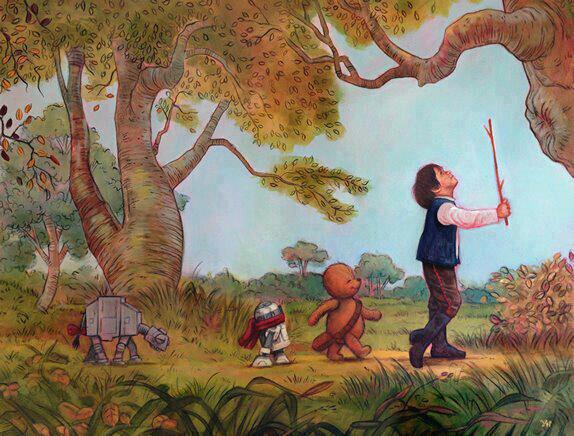
a Jack White song
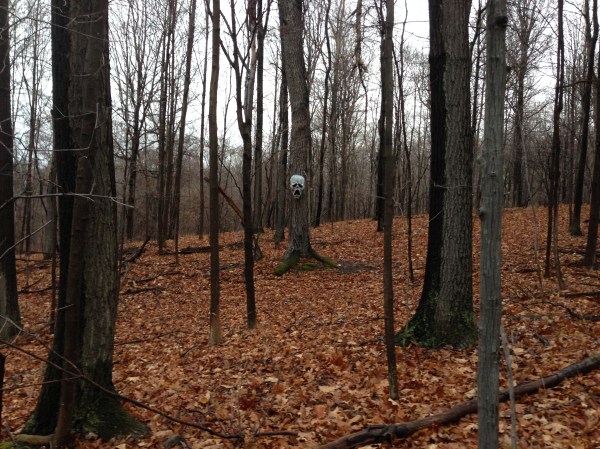
Walking along a shortcut through the forest, yoga mat over my shoulder, singing softly to myself. Listening to the leaves crackle underfoot, I looked left and — BAM. Startled the shit out of me. See, what’s really weird is that this is not the first thing to be nailed halfway up that tree. It used to be a urinal.
“A man who is not afraid of the sea will soon be drownded, for he shall be going out on a day when he shouldn’t. But we do be afraid of the sea, and we do only be drownded now and again.”
-John Millington Synge
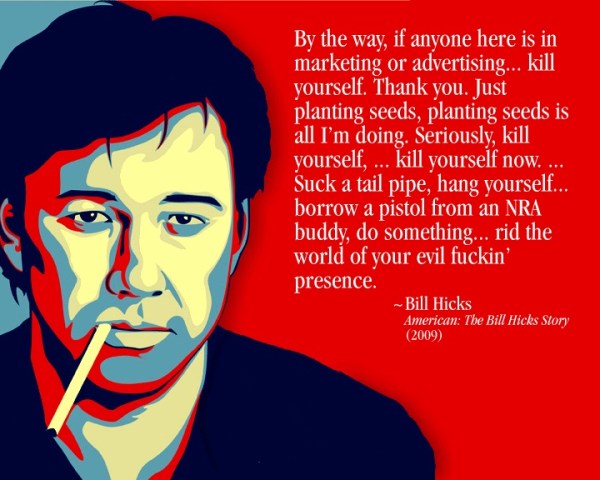
Weird shit is my shit, it’s my life. Unusual things are what get me out of bed in the morning, it’s where I find most of my beauty. But I don’t like weirdness for weirdness’ sake. Years and years ago I watched the first season of LOST and loved it. As an aspiring academic political philosopher, I was tickled by all their references to state of nature social contract theorists (i.e. Locke, Hume, Rousseau) and by the general edge of absurdity and darkness to the show. It was weird for a purpose, and genuinely good art.
Eventually though, as the series progressed, it became apparent that the creators had no real vision for the show, no direction, but because of the nature of popular television, this thing had to grind on, and it had to grind on in a specific way: cliffhangers. By shocking the audience, they got us to sit through commercials. By shocking the audience, they garnered chatter between episodes, playing into the hands of deftly synced marketing campaigns, social media astro-turfing, all the whirring bits of the New York ad-industry hype machine. By shocking the audience, they sold advertising.
It didn’t matter what the shocks were or what they were for, what mattered was that they were effective, and they were. This is the formula for daytime soap operas — no meaningful part of this process is about making art. The show had become an advertising delivery mechanism, where the advertisements and the back of my brain talked directly to each other, while the front of the brain was distracted with explosions, death, sex, laughter, all the shiny monkey shiny look shiny things.
Shocking me to sell advertising, once I’ve wised up to what you’re doing, is both alienating and upsetting. It’s cheap psychology that’s painfully effective because in many ways we are still slaves to the evolutionary imperatives of our atavistic monkey brains. I would argue free will itself is suspect, and all our choices are constrained, but that’s another conversation. My point here is that we are eminently manipulable, and the incentives of the global capital system reward our manipulation.
It’s not that advertisers are evil, any more than corporations are evil, I have good friends who work in both areas. These people by and large are doing only and exactly what the system they exist within values. It’s like water flowing out to find the limits of its container, this shit was always going to happen. It’s symptomatic of the real problem: a global morality based on pure profit. More than anything else, it’s this morality, and the plausible deniability of all of our participation in it, that will one day ruin us all.
But though advertisers as a whole can’t be labeled evil, some of them certainly are, and the umbrella under which they operate definitely is. Advertising is evil because it works on us in a way that’s beyond our choice, it preys on us without consent. It’s about planting seeds and turning the science of psychology to its logical economic extreme; it’s effective despite us, and it feels like being used because that’s what it is. Shiny thing, snapping fingers, get your wallet, snapping fingers, shiny thing. It’s insulting because it works — it’s evil because it’s rape. I want what I want to be what I want. Is that so much to want?
I realize most people weren’t… personally insulted… by the artistic direction of the LOST franchise. I realize this is part of why life is so difficult for me. The reaction I’ll get from people who care about me when I get worked up about things like this is usually, yeah, okay — but is it worth it? Are you happier for having spent your time this way? I don’t know. There’s certainly no societal validation in it, but I have to believe it’s worth it somehow. You have to believe in something, right?
Weird is still one of my highest compliments, and taking risks is a huge part of making art. The psychology of advertising exists in art as well, and the line is a blurry one sometimes. A really sad side-aspect to all of this is that the best advertisers are incredibly smart, incredibly capable creatives. They’re evil geniuses, who in another world would have been artists. They’re the black knights, in their Manhattan towers and sushi dinners, to my white knight with no home and nothing. We all make choices. And in the end, when all is said and done, outcomes are irrelevant; what’s important is the motivation behind our risks.
This Grizzly Bear video has always bothered me. It’s weird for the sake of being weird. The song itself is ostensibly about domestic violence, but the video, though it has interesting moments and visuals, connects neither with the song, nor with itself. It’s just sort of meandering psychedelia with a diffused hippie message about the mechanization of mankind. I think. But in the end, I forgive them, because this is not about selling me anything, it’s not about tricking my monkey brain to sit through commercials, or planting the seed of a product so when I go looking at a shelf I have that subtle prodding push to buy what’s familiar — no, this failure is about art. And in the pursuit of beauty, unlike profit, there is nothing more noble than a weird, embarrassing failure.
“Can’t you feel the knife?”

Here’s Julian Lynch, a member of the weird multitude she fostered, venerating Cyndi Lauper note for note. His breed of freak-flag-flying gender-playful modern human owes her a great debt — this cover is a love letter. There’s a whole generation of LGBT folk living in the light today that looked to her once in their darkness, at a time when it took immense bravery to make the now commonplace public assertion that a person is a person is a person. She’s a goddess, that girl, and gay rights aside, her songs had a layer of artistry and heart that always belied their incredible popularity.
Oh, Cyndi, sweetheart. You were right.
We all just want to have fun.
“If you’re lost you can look and you will find me…”
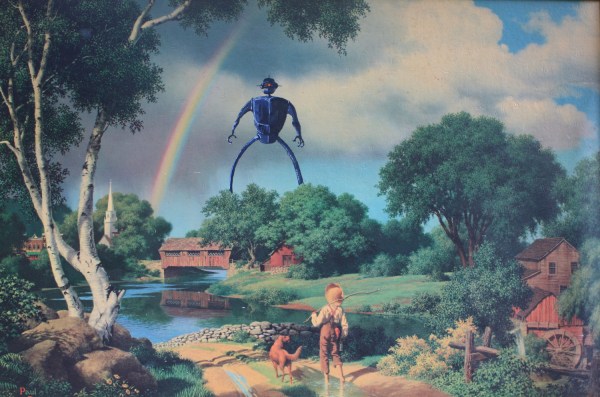
a Flaming Lips song
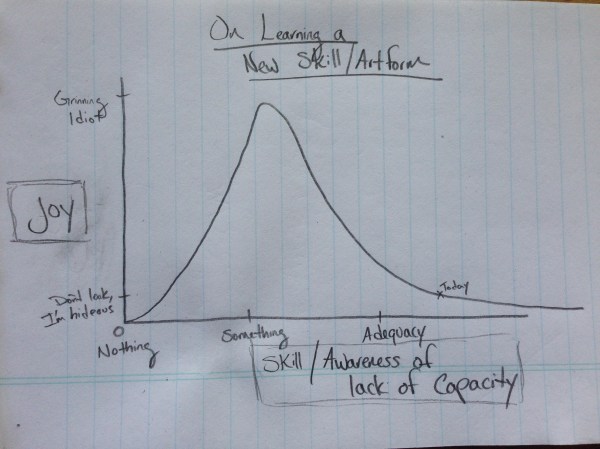
“We Poets in our youth begin in gladness;
But thereof in the end come despondency and madness.”
-William Wordsworth
When I was in 4th grade, this kid Greg was going to go sign up to learn the trumpet. For whatever reason I said, hey, alright, I’ll do that. So we both went down to the music room at Belle Sherman Elementary and got permission slips for our parents to sign — something about the financial liability of loaning a trumpet to a ten-year-old. I went home that night, threw my backpack on the floor and I guess went and played video games or read a book or something. Whatever it was, for whatever reason, that permission slip just never made it to my parents. Greg’s did. So now Greg can play the trumpet. In my later, wiser years, that shit has always killed me. Continue reading “a life of missing notes”

So the bindle is two years old today. How about that? When it was born I was living on wasabi peas, drinking myself to sleep every night on a mattress on the floor of a bare room. These words and sounds and images were a desperate attempt to communicate with a world that didn’t particularly care.
But life is a wild thing. Perpetually shifting and uncertain, each fading sunset could be replaced by literally anything. It’s so god damn beautiful — casually, constantly, like it’s nothing. Whenever I remember to pick my head up out of myself, there it is: so vivid, so bright, so saturated with light and sound and sensation.
Sandwiched between billions of years of darkness and endless nothing, this tiny riot of existence is unbelievable. Some days it’s so much I can’t stand it.
Some days it’s hard to be a cynic.
Joshua Clark Orkin
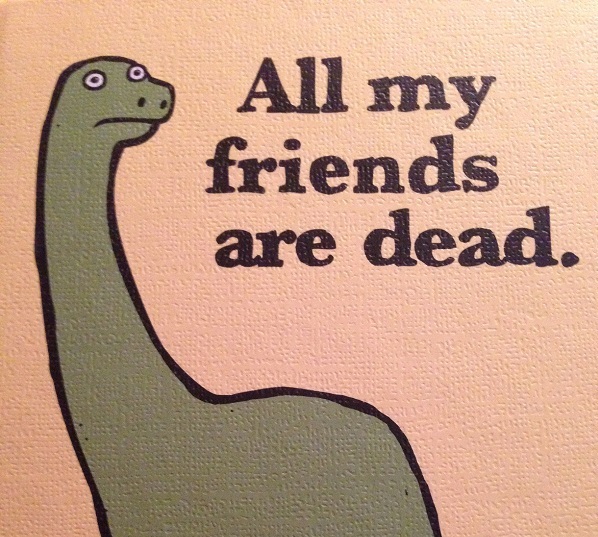
“All My Friends will not make your coke habit more poetic.”
–LCD Soundsystem, Official Website
(bullshit it won’t).
That’s the thing about co-dependency, about anxiety and addiction and sensitivity, about moving around the world — you’re always losing people, so many people, for so many reasons. But no matter the situation, I’ve found if I can submerge myself in an ocean of loud music I can survive almost anything. It soothes me, music, and what’s more, it records: Old playlists are better than any diary. When I hear a song that flooded my life during an emotionally resonant time, it takes me right back to not just the place, but the feelings and sensations of being there. The immediacy of the emotions is almost frightening.
We live in a magical time for this, a digital golden age unlike anything that preceded it, where all the music ever made is literally in our pockets, available exactly when we want it. My parents were good hippies and listened to good music, truly they did, but their relationship to it was more along the lines of buying the new Cat Stevens album and getting everyone together to share a joint and listen. There was a record-player plugged into the wall and there were crates of vinyl you carried about when you moved. It was something you did at home; there was a physicality to it, a degree of separation between music and life. It’s not the same.
My entire adult life has been set to a soundtrack. From the dramatic to the profound to the mundane the scenes line the shelves of my mind, cinematic, infused with art and meaning and metaphor, and I picked the score myself, and it’s perfect. The memories aren’t just linked to songs, they’re linked to the right songs. It’s incredible, all this activated potential, all the sensations of life on constant offer; truly, unspeakably gorgeous. But the film I see when I listen, for all its loveliness, all its emotional depth and richness, is ultimately very sad.
“…where are your friends tonight?”
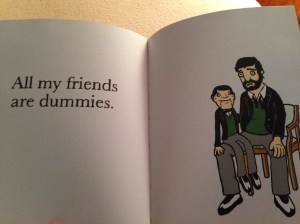



There is no catcher.
Joshua Clark Orkin

Joshua “Deakin” Dibb, the notoriously expendable member of Animal Collective, left the band on a “hiatus” right before Merriweather Post Pavilion dropped and sent them into the global music stratosphere. As the three-man Animal Collective toured the globe and became internationally famous and wealthy, Deakin faded deeper and deeper into the mists of their history. Unfortunately (fortunately?) he was never truly forgotten, because the internet was still busy reviling him.

During this hiatus he put together a Kickstarter asking for $25,000 to go to Mali. I’ll say from just a travel expense perspective, that’s an outrageous amount of money to send one person to Africa. Ostensibly he was going to play a show with Gang Gang Dance, record an album, and produce some kind of visual poster/book to go along with it. Gang Gang Dance dropped out, but Animal Collective fans still, sort of shockingly, donated enough to meet the goal. So he took the money and went.
And then nothing. Nothing happened for years, no music, no nothing, and the internet was not impressed. His micro-fiscal backers left angry posts all over message boards, and a new breed of “crying Deakin” meme was born. It got bad.
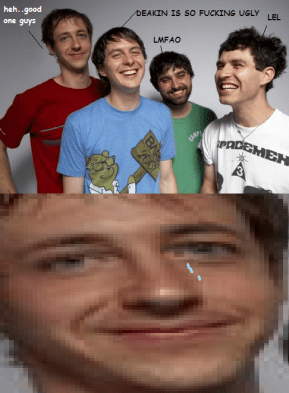
During this time he would pop up periodically to reply to some of his most virulent critics, saying he was sorry, that he had actually given most of the money to an anti-slavery NGO in Mali, that he was trying to work on an album, that it just hadn’t happened.
Later he would talk in interviews about the crippling insecurity he struggled with, the weight of his doubts about what he had actually brought to Animal Collective, about his singing voice, about whether in the end he even had anything worth saying. So this year, when his solo album finally came out, it created a small sensation. And honestly? I hated most of it. The meat of this record is a painful, try-hard mess.
I’m moving into the realm of speculation and opinion here, so it’s important to back up and say first that I think Animal Collective was one of the most innovative, influential bands of this generation. So much art, even great art, is the rehashing of old ideas, the use of old tropes in new ways. It’s trope because it works, and there’s nothing wrong with that; this kind of art represents most of our cherished cultural heritage. But real genius, that sporadic flash of true human miracle, is innovation.
Animal Collective, at least up through Feels and Strawberry Jam, and to a lesser extent Merriweather Post Pavilion, were truly doing things that hadn’t been done before. It was fresh, and weird, and difficult, and exciting. That being said, it was always sort of understood that the driving creative forces there were Avey Tare and Panda Bear (Dave Porter and Noah Lennox). To echo poor Josh’s demons, it’s hard to tell what exactly Deakin was doing that was vital to this phenomenon. I mean shit, they kept sort of telling him nicely not to come anymore.

But Animal Collective of late, both with Deakin and without, has lost its fire. They’re still weird, but it’s more weird for weird’s sake, and it’s not new anymore. The heart has gone out of their music, for me at least, along with the heat — their new songs are missing something important; they feel hollow. As a band they’ve moved very far away from sitting on the floor singing “Covered in Frogs” to a room full of confused people. So it was with surprised delight that I discovered, despite Sleep Cycle‘s rancid meat middle, that Deakin opened and closed his late little offering with bookends of pure blue sky. It’s authentic early Animal Collective, and it’s bliss.
He may not have invented Panda Bear and Avey Tare’s irregular rhythmic and vocal methods, but he was there, and he helped, and he learned. Those years on tour and in the studio were not for nothing. Animal Collective after Merriweather Post Pavilion no longer sounds to me like the Animal Collective I fell in love with — but here, Deakin does. His songs are excellent, and real, and full of simple, vulnerable heart. Despite his public humiliation, his failures and paralyzing insecurity, he did have something to say, and he says it here softly to himself, and it’s all about redemption.
“You tell me what’s wrong…
…But what’s right?”
“so this is what makes life
divine…“
 handkerchief tied to stick